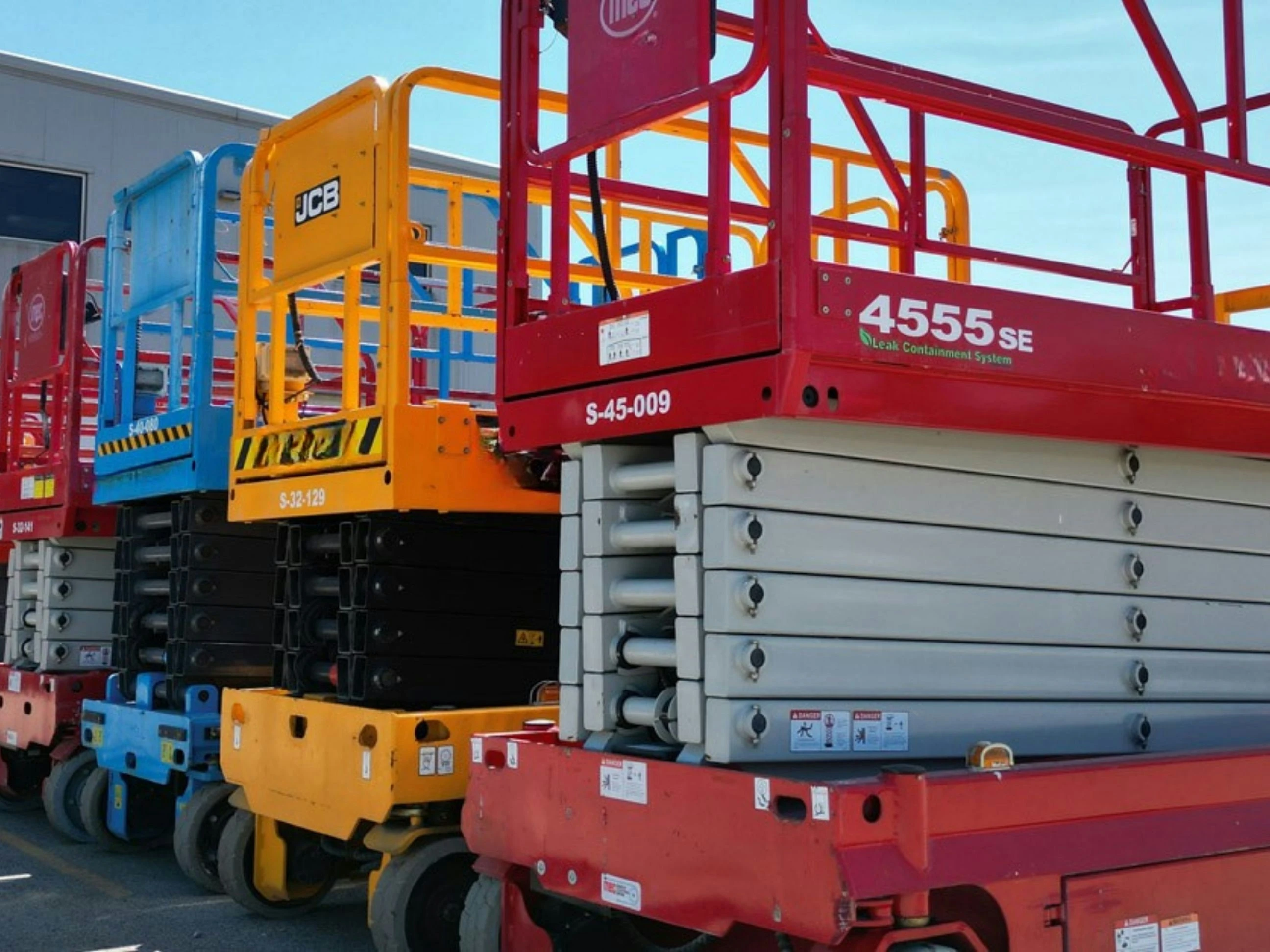
Rough-Terrain Scissor Lift Rentals in Irving, TX
Call for Pricing & Availability(214) 393-5107Call to discuss rough-terrain scissor lifts pricing, availability and jobsite requirements.
Irving’s growing construction and landscaping sectors demand reliable aerial platforms that can safely navigate uneven, soft, and sloped outdoor terrain. Rough-terrain scissor lifts provide elevated work access with stability on challenging ground, supporting commercial framing, site installations, and maintenance tasks. Understanding capacity, maneuverability, and surface compatibility helps contractors and facility managers select the right equipment for Irving’s jobsite conditions.
Outdoor accessWhat Makes a Scissor Lift Suitable for Rough Terrain?
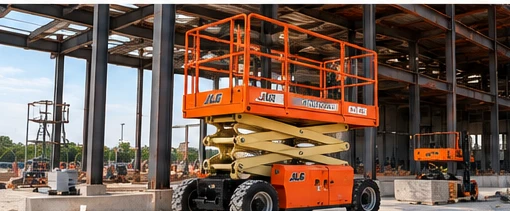
Rough-terrain scissor lifts are engineered specifically to operate on uneven and softer ground surfaces common at outdoor construction and landscaping sites. Key features include enhanced suspension systems, larger tires with deep tread, and higher ground clearance to navigate obstacles and variable soil conditions safely. These lifts typically have improved gradeability ratings, allowing them to climb slopes within manufacturer-specified limits while maintaining platform stability.
However, gradeability ratings do not automatically permit operation on steep slopes while elevated. Operators must always consult the lift’s operating manual and adhere to restrictions for stability and safe use. Outriggers or stabilizers, when fitted, provide additional support on irregular surfaces but require proper deployment and inspection before use. Selecting a lift with the right balance of width and maneuvering capability is critical to accessing tight or congested outdoor sites in Irving.
How Do Rough-Terrain Scissor Lifts Support Irving’s Construction and Landscaping Needs?
Irving’s commercial framing and site installation projects frequently involve working at height on uneven ground where traditional electric or slab scissor lifts are unsuitable. Rough-terrain models enable crews to elevate safely to perform tasks like installing exterior cladding, electrical systems, or HVAC components. Their robust powertrains and traction systems provide the torque and control needed to traverse dirt, gravel, and graded surfaces common in Irving’s outdoor worksites.
Landscaping and outdoor infrastructure maintenance also benefit from these lifts. Tasks such as tree trimming, lighting installation, and fence repair require stable platforms that can be positioned flexibly on natural terrain. The ability to reach heights of 30 to 45 feet with platform capacities ranging from 800 to 1500 pounds accommodates diverse crew sizes and tool loads, optimizing productivity without compromising safety.
Which Rough-Terrain Scissor Lift Models Illustrate Typical Capabilities?
The Genie GS-3369 RT rough-terrain scissor lift is a representative example for Irving applications, offering a maximum working height of 38 feet 8 inches and a platform capacity of 1000 pounds. Its 5-foot 9-inch machine width balances access through moderate site constraints with stable ground contact. This model’s power system is designed for outdoor use, providing reliable traction and control on uneven surfaces while minimizing noise during operation.
For heavier capacity needs, the Genie GS-2669 RT delivers a platform capacity of up to 1500 pounds at a working height of 32 feet. This model suits projects requiring additional personnel or equipment on the platform. Meanwhile, the GS-4069 RT extends working height capabilities to over 46 feet, ideal for larger commercial sites with tall structures. Each model comes with manufacturer guidelines emphasizing slope limitations and safe operation protocols essential for Irving’s jobsite environments.
Questions about rough-terrain scissor lifts?
Discuss equipment requirements, project dates and site conditions by phone.
What Safety Considerations Are Essential When Using Rough-Terrain Scissor Lifts?
Safety is paramount when operating rough-terrain scissor lifts. OSHA classifies these lifts as mobile supported scaffolds, requiring operators to be trained and familiar with the specific equipment’s controls, limitations, and emergency procedures. Pre-use inspections must include checking tires, suspension, outriggers if present, and verifying that the ground surface can support the machine’s weight and load.
Wind conditions and weather also affect safe operation, especially on elevated platforms outdoors. Operators should avoid use during high winds or unstable weather. Guardrails must always be in place and intact, and the platform should never be overloaded beyond the manufacturer’s rated capacity. Adhering strictly to the manufacturer’s operating manual and Irving’s local site safety regulations helps prevent accidents and equipment damage.
How to Choose the Right Rough-Terrain Scissor Lift for Your Irving Project?
Selecting the appropriate rough-terrain scissor lift involves evaluating the jobsite surface, access constraints, height requirements, and load capacity. For Irving’s varied outdoor conditions, consider soil bearing capacity and slope grades carefully. Narrower machines facilitate movement through tighter spaces but may sacrifice some stability, while wider bases provide enhanced steadiness on rough ground.
Power source and noise levels also influence choice. Diesel or dual-fuel models offer strong outdoor performance but generate exhaust and noise, whereas electric rough-terrain lifts reduce emissions but may have limited run time. Reviewing manufacturer specifications alongside project needs and consulting with rental experts ensures the right fit for your specific Irving jobsite.
Explore equipment categories
Common questions
Can rough-terrain scissor lifts be used indoors at Irving facilities?
Rough-terrain scissor lifts are primarily designed for outdoor use on uneven ground and may emit exhaust if powered by diesel or gas. For indoor Irving facilities with flat slab floors, electric scissor lifts are generally preferred to avoid emissions and noise, ensuring compliance with indoor air quality standards.
What slope can a rough-terrain scissor lift safely operate on in Irving?
Each model has manufacturer-specified maximum slope ratings, often around 25% grade. However, elevating on slopes is usually restricted. Operators must consult the equipment manual for exact limits and avoid exceeding tilt thresholds to maintain platform stability and safety.
Are outriggers necessary on all rough-terrain scissor lifts?
Not all rough-terrain scissor lifts come equipped with outriggers. When present, outriggers enhance stability on uneven surfaces but require proper setup and inspection before use. Always follow manufacturer instructions and site safety protocols regarding outriggers.
How does platform capacity affect lift selection for Irving projects?
Platform capacity determines the total weight of personnel, tools, and materials the lift can safely support. Irving projects with multiple workers or heavy equipment require lifts with higher capacity, such as 1500 pounds, to ensure safe operation without overloading.
What training is required to operate rough-terrain scissor lifts safely?
OSHA mandates operators receive training specific to the equipment model, covering controls, hazards, and emergency procedures. Training ensures operators understand surface suitability, load limits, and safe maneuvering techniques essential for Irving’s outdoor environments.